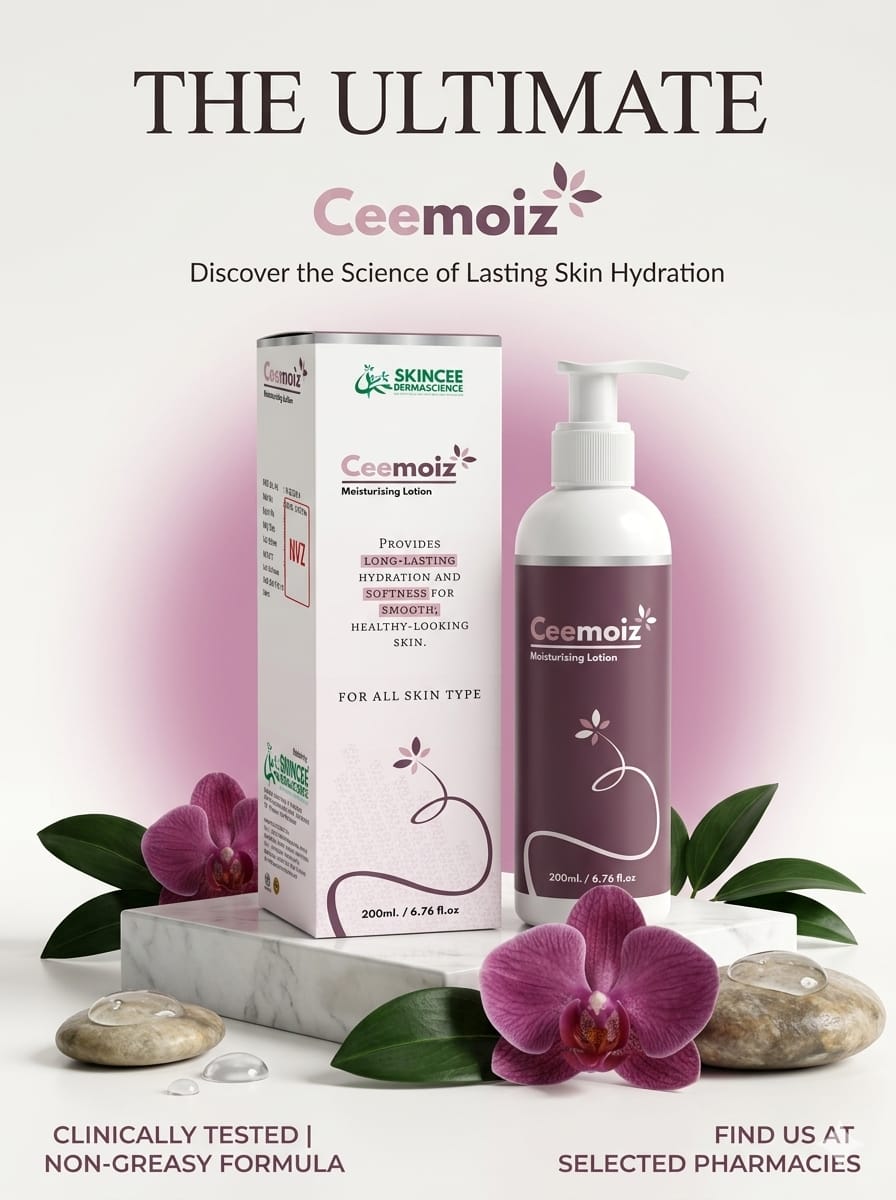
Dry skin - medically, xerosis - is one of those complaints that seems too minor to mention and too persistent to ignore. It shows up as tightness after washing, rough patches on the arms and legs, fine flaking, dullness and sometimes a low-grade itch that worsens at night. The good news is that it usually responds very well to a routine, provided the routine is built around how skin actually retains water.
Dry skin is a barrier problem
The outermost layer of skin behaves rather like a brick wall. Skin cells are the bricks; a mixture of lipids - ceramides, cholesterol and fatty acids - is the mortar holding them together. That mortar is what stops water escaping.
When the lipid layer is depleted, water evaporates faster than it can be replaced. This is called transepidermal water loss, and it is why dry skin is not really solved by drinking more water: the issue is not supply, it is the leak. Restore the barrier and the moisture stays put.
What depletes the barrier
- Hot showers - heat strips lipids far more aggressively than lukewarm water
- Harsh soaps with a high pH, which dissolve the very lipids you need
- Over-washing and vigorous scrubbing
- Low humidity from winter air or constant air conditioning
- Age - natural lipid production declines over time
- Underlying conditions such as eczema, psoriasis or thyroid disorders
The three ingredient types that matter
Moisturiser labels list dozens of ingredients, but almost all of them do one of three jobs:
- Humectants - glycerin, hyaluronic acid, urea. These draw water into the outer skin layer. Highly effective, but in very dry air they need something sealing over them or the water they attract simply evaporates.
- Emollients - shea butter, kokum butter, plant oils, fatty acids. These fill the gaps between skin cells, which is what makes skin feel smooth and soft rather than rough.
- Occlusives - petrolatum, dimethicone, waxes. These form a thin film that physically slows water loss. Most useful at night and on hands, feet and elbows.
A well-formulated lotion generally combines all three. Aloe vera, vitamin E and niacinamide add soothing and antioxidant benefits alongside the core hydrating function.
The three-minute rule: apply moisturiser within three minutes of bathing, while skin is still slightly damp. You are sealing in water that is already there, which is considerably more effective than applying to fully dry skin. This single change often makes more difference than switching products.
A simple daily routine
Morning
- Cleanse with a gentle, soap-free or moisturising cleanser in lukewarm water
- Pat - do not rub - the skin until just damp
- Apply moisturising lotion to the face and body while damp
- Finish with broad spectrum sunscreen on exposed areas
Evening
- Cleanse to remove sunscreen, pollutants and the day's grime
- Reapply moisturiser, using a richer texture on hands, feet, elbows and knees
- Treat any particularly rough or cracked areas with a thicker occlusive
Habits that make the biggest difference
- Keep showers under ten minutes and comfortably warm rather than hot
- Swap high-pH bar soaps for a moisturising cleanser or bodywash
- Pat dry instead of rubbing with the towel
- Reapply hand cream after every wash - hands lose moisture fastest
- Use a humidifier if you sleep in air conditioning
- Choose cotton over wool directly against dry, itchy skin
- Be consistent - barrier repair takes two to four weeks of daily care
When dryness needs medical attention
See a dermatologist if the skin cracks, bleeds or becomes painful; if itching disturbs your sleep; if there is significant redness, swelling or signs of infection; or if diligent daily moisturising brings no improvement after a few weeks. Persistent dryness with intense itch may indicate eczema, psoriasis or an underlying systemic condition - each of which needs a specific treatment plan rather than a moisturiser alone.