Fungal skin infections are among the most common dermatological complaints in India, and for good reason. The fungi responsible thrive in exactly the conditions much of the country provides for months at a time: warmth, humidity and moisture trapped against the skin. They are rarely dangerous, but they are persistent, uncomfortable and easy to pass on to family members.
What causes a fungal skin infection?
Most superficial infections are caused by dermatophytes - a group of fungi that feed on keratin, the protein in skin, hair and nails. A smaller number are caused by yeasts such as Candida. These organisms are common in the environment and often live harmlessly on the skin. Problems begin when conditions let them multiply faster than the skin can shed them.
Factors that commonly tip the balance include:
- Heat and sweat trapped under clothing, particularly in skin folds
- Tight or synthetic fabrics that stop moisture evaporating
- Shared items such as towels, footwear, combs and gym equipment
- Damp footwear worn for long hours
- Reduced immunity, uncontrolled diabetes, or prolonged steroid use
Common types you should recognise
Tinea corporis (ringworm)
Appears on the body as a round or oval patch with a raised, scaly, advancing border and clearer skin in the centre - the "ring" that gives it its name. It is usually itchy and spreads outward if untreated. Despite the name, no worm is involved.
Tinea cruris (jock itch)
Affects the groin and inner thighs, where sweat collects and air circulates poorly. It typically causes a red-brown itchy rash with a well-defined edge and is more common in people who are physically active or overweight.
Tinea pedis (athlete's foot)
Presents as itching, scaling and cracking, most often between the toes. It is easily picked up walking barefoot in shared wet areas and can spread to the toenails if left alone.
Onychomycosis (nail fungus)
Nails become thickened, brittle and discoloured - yellow, white or brown - and may separate from the nail bed. This is the most stubborn form, because topical treatments struggle to penetrate the nail plate. It generally requires systemic (oral) treatment over several months.
How fungal infections are treated
Treatment depends on how widespread the infection is and which body site is affected. Broadly, there are three approaches:
- Topical antifungals - creams and lotions applied directly to the skin. Agents such as luliconazole work well for localised infections of the body, groin and feet. Apply to the visible patch and a margin of two to three centimetres of normal-looking skin around it, since the fungus extends further than the rash suggests.
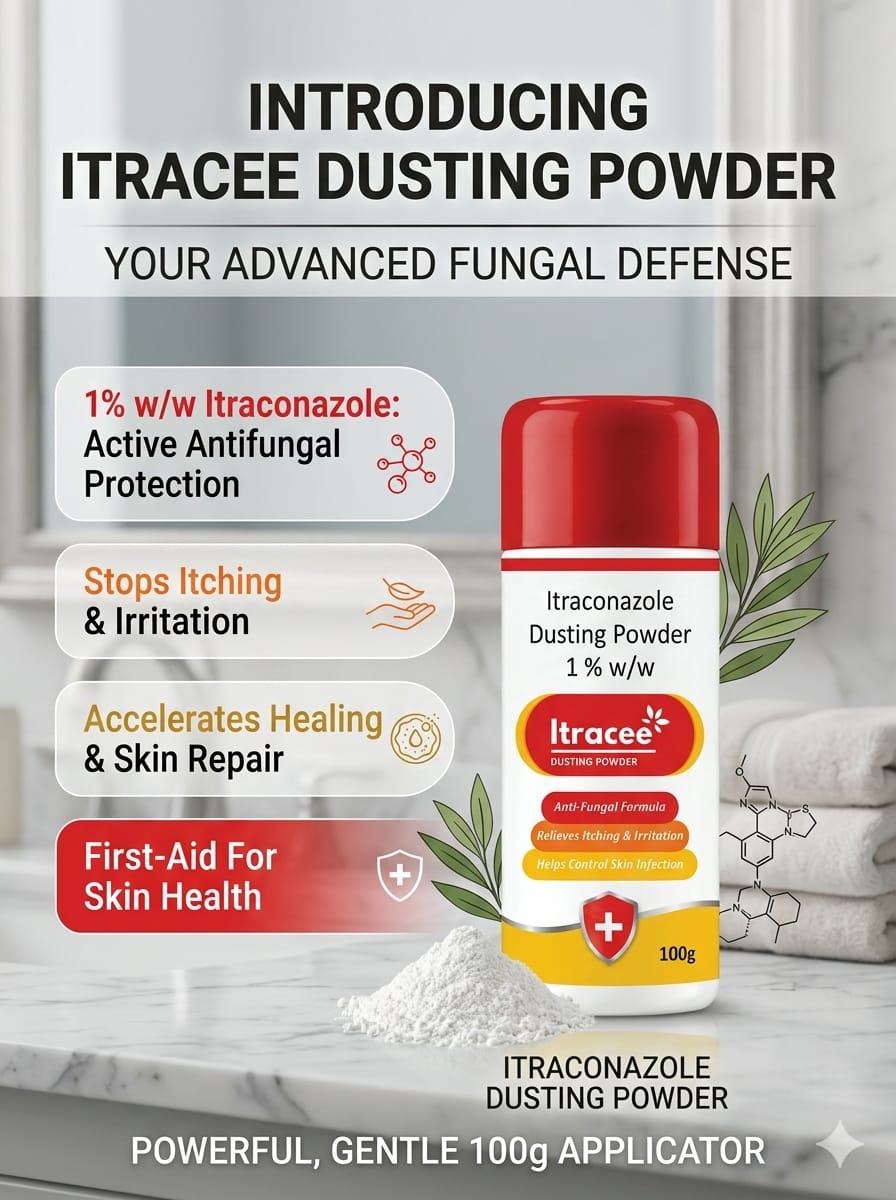
- Antifungal dusting powders - useful as adjunct therapy and for prevention. They absorb moisture in skin folds, between toes and inside footwear, removing the humidity that fungi need to grow.
- Systemic (oral) antifungals - reserved for extensive, recurrent or nail and scalp infections. Agents such as itraconazole are prescribed for a defined course and require medical supervision.
The most common reason fungal infections come back is stopping treatment too early. Itching and redness often settle within a week or two, but the fungus is still present in the skin. Treatment should continue for the full duration your doctor prescribes - frequently two to four weeks beyond the point where the skin looks normal.
Preventing recurrence
Because reinfection is so common, day-to-day habits matter as much as the medicine itself:
- Dry thoroughly after bathing, paying attention to skin folds and between the toes
- Change out of sweaty clothing promptly; avoid re-wearing unwashed gym wear
- Choose loose, breathable cotton over tight synthetics
- Never share towels, footwear, socks or combs
- Wash clothing and bedding in hot water during an active infection
- Rotate footwear so shoes dry fully between wears
- Treat all affected household members at the same time to break the cycle
When to see a doctor
Consult a dermatologist if the rash is spreading despite treatment, covers a large area, involves the nails or scalp, keeps returning after treatment, or if you have diabetes or a weakened immune system. Extensive or recurring infections generally need oral therapy and proper diagnosis - several non-fungal conditions, including eczema and psoriasis, can look very similar, and treating them with the wrong product can make matters worse.
A particular caution: over-the-counter combination creams containing potent steroids are widely misused for fungal rashes. They reduce redness and itching at first while allowing the infection to spread further and become much harder to treat.